

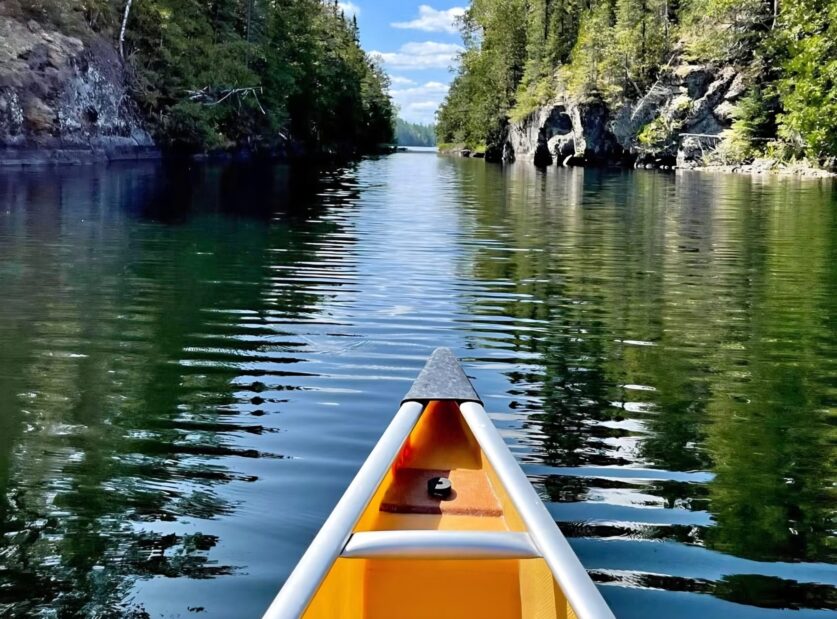
There’s something quietly transformative about canoeing in the wilderness for me. The moment your paddle dips into the water and the shoreline begins to drift away, the noise of everyday life softens. You’re left with only what you’ve brought, what you truly need, and the rhythm of your own effort. It’s in these moments, surrounded by nature, guided by simplicity, that many people begin to see life, and even money, a little differently.
Paddling and financial planning might seem like an unlikely pair at first, but the parallels are striking. At least that’s how my brain thinks. Both require intention, preparation, and a clear sense of direction. More importantly, both reward a frugal, thoughtful approach that emphasizes purpose over excess. When you look closely, the lessons learned on the water can reshape how you approach your finances and your life as a whole.
Making choices
Before setting out on a canoe trip, you make deliberate choices about what to bring. Space is limited, and every item must earn its place. You pack essentials, food, water, safety gear, and skip anything unnecessary. Overpacking only slows you down and makes the journey harder. This is exactly how effective financial planning works. When you evaluate your spending, you begin to ask similar questions: Do I really need this? Does it add value to my life? Or is it just extra weight?
A frugal mindset isn’t about restriction or missing out. It’s about clarity. It’s about recognizing that more isn’t always better, and that excess can actually hold you back. Just as a well-packed canoe glides smoothly across the water, a well-managed budget creates ease and flexibility in your life. You move forward with less resistance, more confidence, and a stronger sense of control.
Being outdoors
Outdoors, you quickly learn the value of preparation. Checking the weather, understanding the route, and anticipating challenges are all part of a successful canoeing experience. The same applies to money. Financial planning isn’t about predicting every twist and turn. It’s about being ready for them. Emergencies, unexpected expenses, and changes in circumstances are inevitable. But with a solid plan, they don’t have to derail your progress.
Think of your emergency fund as your life jacket. You hope you won’t need it, but having it gives you peace of mind and keeps you safe when conditions change. Savings, investments, and thoughtful budgeting are like the maps and tools that guide your journey. They don’t eliminate uncertainty, but they help you navigate it with confidence.
Paddling patience
Canoeing also teaches patience in a way few other activities can. You can’t rush across a lake by sheer force. If you paddle too aggressively without rhythm, you tire quickly and lose efficiency. Instead, progress comes from steady, consistent effort. Each stroke builds on the last, gradually moving you forward.
This is one of the most powerful lessons for managing money. Financial growth rarely happens overnight. It’s the result of small, consistent actions. Saving regularly, spending thoughtfully, and making informed decisions over time. Comparing yourself to others can feel like trying to race another canoe across the water. It’s exhausting and often discouraging. Everyone’s journey is different, shaped by their own goals, resources, and circumstances.
A more helpful comparison is between where you are today and where you were yesterday. Are you making progress? Are your habits improving? Just like in canoeing, even slow movement in the right direction is meaningful. Over time, those small gains add up to significant change.
Connection with canoeing
One of the most rewarding aspects of canoeing is the connection it fosters with nature, with others, and with yourself. Away from constant distractions, you have space to reflect. You begin to notice what truly matters. Often, it’s not the things you own, but the experiences you have and the relationships you build.
This realization has a profound impact on how you view money. Instead of seeing it as something to accumulate endlessly, you start to see it as a tool. A means of supporting the life you want to live. A frugal approach aligns perfectly with this perspective. By spending less on things that don’t matter, you create more room for what does.
Maybe that means investing in experiences like travel or outdoor adventures. Maybe it means having the flexibility to work less and spend more time with loved ones. Or maybe it simply means reducing stress and feeling more secure. Whatever your priorities, intentional financial choices make them more achievable.
Being adaptable
Canoeing also highlights the importance of adaptability. Conditions can change quickly—a sudden wind, shifting currents, or unexpected obstacles. You adjust your approach, change your route, or take a break when needed. Rigidity doesn’t work well on the water, and it doesn’t work well in financial planning either.
Life is unpredictable. Goals evolve, circumstances shift, and new opportunities arise. A positive, flexible mindset allows you to adapt without losing sight of your overall direction. Being frugal doesn’t mean being inflexible. It means being mindful and responsive, making decisions that support your long-term well-being even as things change.
Finding balance
Another interesting comparison is the concept of balance. In a canoe, balance is essential. Lean too far in one direction, and you risk tipping over. Stay centered, and you move smoothly and confidently. Financially, balance is just as important. Saving is crucial, but so is enjoying the present. Planning for the future matters, but so does living your life today.
A healthy financial approach finds that middle ground. It avoids extremes. Neither reckless spending nor excessive restriction. Instead, it focuses on sustainability. You build habits that you can maintain over the long term, creating a sense of stability and peace.
There’s also a deep sense of satisfaction that comes from self-reliance. When you paddle your own canoe, you feel a connection between your effort and your progress. You’re not dependent on external forces. You’re actively shaping your journey. Financial independence offers a similar reward. By managing your money thoughtfully, you gain greater control over your life and your choices.
This doesn’t mean doing everything alone. Just as canoeing can be a shared experience, financial planning can benefit from collaboration whether it’s learning from others, seeking advice, or working toward shared goals. But at its core, both are about taking responsibility and being intentional.
The simplicity of canoeing
Perhaps one of the most beautiful aspects of canoeing is its simplicity. It doesn’t require complicated equipment or elaborate plans. At its heart, it’s just you, a canoe, a paddle, and the water. That simplicity is refreshing in a world that often feels overly complex.
Applying that same simplicity to your finances can be incredibly freeing. You don’t need a complicated system to manage your money effectively. Clear goals, a basic budget, consistent habits, and a frugal mindset can take you a long way. The fewer unnecessary complexities you introduce, the easier it becomes to stay on track.
Ultimately, canoeing offers more than just an outdoor activity. It provides a perspective. It reminds you that progress doesn’t have to be fast to be meaningful, that less can truly be more, and that intentional choices create a smoother, more enjoyable journey.
The bottom line
When you bring these lessons into your financial life, something shifts. Money becomes less about stress and comparison, and more about alignment and purpose. You begin to see your resources as tools that support your values, rather than measures of success.
Just like a peaceful paddle across a quiet lake, that shift brings a sense of calm, confidence, and quiet optimism. Life, much like canoeing, isn’t about rushing to the finish line. It’s about navigating thoughtfully, appreciating the journey, and moving forward with intention. One steady stroke at a time Keeping Life Current.
