
Maybe I’m a lay person here and in no way a subject matter expert. No one should take the following information as gospel. It is important to consult with your auto insurance broker or insurance provider for advice pertinent to your situation.
For most people, automobile insurance is something they arrange once a year, pay for each month, and hope they never need. It becomes much more important when something changes. A collision, a claim, an at-fault determination or a significant increase in premiums can quickly turn an ordinary household expense into a financial concern.
Let’s take the example of someone I know who experienced four minor collisions within two years. For them, the concern was even greater. Each incident may have seemed relatively insignificant at the time, but insurance companies do not necessarily look at each collision in isolation. The industry consider the broader driving and claims history when assessing risk, and that can affect both the availability and cost of insurance. This is where automobile insurance becomes more than an insurance question. It becomes part of financial life planning.
Four minor collisions
Ontario has specific rules concerning what qualifies as a minor accident. For private passenger automobiles, an accident can receive special treatment when the damage is within the prescribed limit, there are no personal injuries, and no insurer makes a payment for the damage. Under the current regulation, the damage threshold is $2,000 per automobile, including associated property damage, with the at-fault driver paying the applicable damage costs.
However, there is an important exception. An insurer may consider minor accidents when, within the previous two years, there has been more than one minor accident involving the automobiles covered by the policy and the driver was at fault in at least one of them. For example, a small bump in a busy parking lot, hitting a concrete stanchion while parking in an underground parking garage, and a minor rear end collision at a red light. All minor in their own right.
For a client who has had four minor collisions in two years, this distinction can be extremely important. Calling the collisions minor does not necessarily mean their cumulative insurance consequences will be minor. The financial impact can extend beyond the cost of repairing a vehicle. A driver may find that an insurer’s renewal terms change, another insurer is unwilling to provide coverage, or the driver must seek coverage through a higher-risk market.
The lesson is straightforward: the size of an individual accident and the overall insurance risk represented by a claims history are not necessarily the same thing.
What at fault means
Ontario uses established fault determination rules to assign responsibility following many types of collisions. Fault can range from zero to 100 percent, and the determination is based on the circumstances of the accident and the applicable rules.
For clients, this can sometimes be confusing. You may believe that an accident was unavoidable or that the other driver contributed to what happened. Insurance fault, however, is determined according to Ontario’s insurance rules rather than simply according to each driver’s personal interpretation of the event.
This matters because at-fault accidents can influence future insurance costs. It also means that when reviewing your financial situation after an accident, it is useful to understand not only what happened to the vehicle but also how the incident may affect your insurance profile.
A collision can therefore have several financial consequences at once: the immediate deductible or repair cost, possible changes to future premiums, transportation expenses while a vehicle is being repaired and, potentially, a more difficult insurance market.
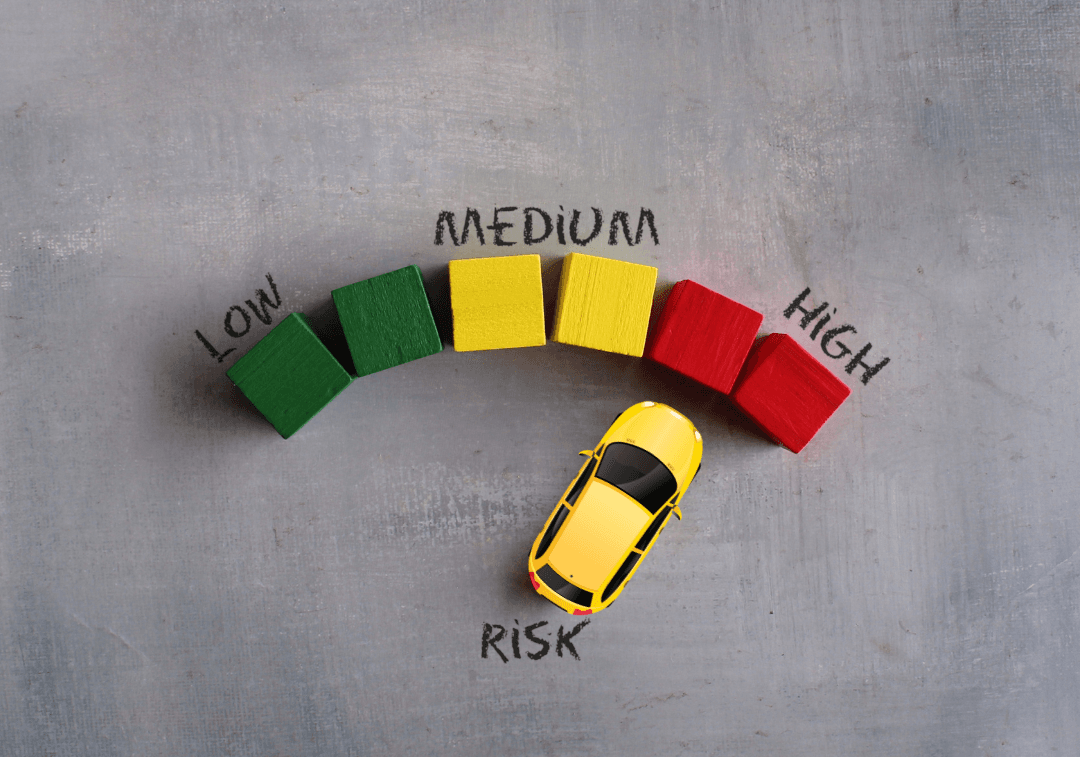
Move to the high risk market
One of the most difficult surprises for a driver is discovering that a familiar insurance company will no longer offer coverage at the same price, for may not offer coverage at all.
Ontario’s insurance system includes a high-risk market for drivers who may have difficulty obtaining coverage through the regular market. An individual insurer may decide not to offer coverage to a high-risk driver, although Ontario’s system provides a mechanism for drivers who cannot obtain coverage elsewhere.
With four at-fault accidents in two years, people would be looking exclusively at the non-standard (high risk) market or, in the worst-case scenario, the provincial Facility Association (FA). Standard insurance companies will reject these risk profiles, as most allow a maximum of two at-fault accidents before cancellation or non-renewal.
Non-standard (high risk) carriers would be your first and best option. Specialized Ontario companies like Pafco, Jevco, and Coachman exist exactly for this middle ground. They will accept four at-fault accidents, but premiums will be significantly higher than standard rates.
If your non-standard applications are rejected due to other compounding risk factors, you will be forced into the FA. This is an insurance pool of last resort. By law, they cannot refuse you basic coverage, but they charge the highest legal rates in Ontario.
For a client, the key point is that there is no single premium that can be described as the high drisk rate. Insurance pricing is individual. Driving history, location, vehicle, age, experience, convictions, claims, coverage, and other rating factors can all contribute to the quotation.
Consequently, someone with four collisions in two years should not assume that a particular premium quoted to another driver will apply to them. The practical question is what insurers are actually prepared to offer based on that individual’s circumstances.
Premiums are a financial planning issue
A considerable increase in automobile insurance premiums can change the household budget surprisingly quickly. Consider a family that has historically spent $250 a month on automobile insurance. If its new circumstances result in substantially higher premiums, the additional annual cost can become several thousand dollars. That money has to come from somewhere.
It may mean less money available for retirement savings. It may affect a mortgage repayment strategy, discretionary spending, education savings, or the ability to maintain an emergency reserve. For someone approaching retirement, a recurring increase in transportation costs can also affect the amount of income required each month.
This is why financial life planning should not be limited to investments. Your financial life includes the cost of maintaining the life you live. Housing, transportation, insurance, taxes, healthcare, and family responsibilities all interact with your long term financial goals. When one of those costs changes significantly, the overall plan may need to change with it.
That is particularly relevant when an insurance problem is temporary. A higher premium today does not necessarily mean the same premium will apply indefinitely. Your driving record can change over time, and your insurance options may change as well.
Ontario’s 2026 insurance changes
There is another reason for Ontario drivers to review their automobile insurance in 2026. Effective July 1, 2026, Ontario changed the treatment of statutory accident benefits. Medical, rehabilitation and attendant care benefits remain mandatory, while a number of other accident benefits became optional. These include income replacement, non-earner, caregiver, housekeeping and home maintenance, lost educational expenses, defendant care, death and funeral benefits and indexation. For clients, this creates an important planning question: What protection do you actually need?
A lower premium is not automatically a better financial outcome if achieving that lower premium means giving up protection that your household could need after a serious accident. At the same time, some clients may already have related protection through an employer benefits plan or another insurance policy. It is specifically recommended to consider existing coverage when reviewing optional accident benefits.
The answer is therefore different for every household. Someone with substantial employer disability coverage, significant financial resources and different family circumstances may make different insurance choices from someone who is self-employed, has young children or depends heavily on employment income. This is where insurance and financial life planning should work together.
Do not look at the premium only
When insurance becomes expensive, the natural reaction is to look for the lowest possible price. Cost matters, particularly when a household is dealing with a sudden increase. But price should be considered alongside coverage.
Ontario requires a minimum of $200,000 in third-party liability coverage, but drivers can purchase higher limits, including $500,000, $1 million, and $2 million.
For many families, the question is not simply how I can reduce my premium. It is how much financial risk am I comfortable retaining myself? That is a very different question. The same principle applies to deductibles and optional accident benefits. Reducing coverage can reduce today’s expense, but it can also increase the amount of financial responsibility that remains with you if something goes wrong. Good planning involves understanding that trade off rather than automatically choosing the cheapest option.
When the rules feel ridiculous
Ontario’s automobile insurance system can sometimes feel unnecessarily complicated to the person trying to navigate it. A driver can have a collision that causes very little damage and believe it should not matter. Yet multiple minor accidents can become relevant to underwriting. A person can have a clean financial record but suddenly face a major increase in insurance costs because of events that occurred over a relatively short period. From the driver’s perspective, that can feel disproportionate.
From the insurance industry’s perspective, however, underwriting is designed to evaluate patterns of risk rather than simply the dollar value of one repair bill. Understanding that difference can help clients make better decisions. Instead of treating each collision as an isolated event, consider what it means within the larger financial picture.
Insurance is part of your financial life
A difficult insurance situation does not have to define your financial future. If you are dealing with multiple claims, an at-fault determination, a high risk insurer, or a substantial premium increase, the first step is to understand exactly what has changed. Then consider how the new cost affects your broader financial life plan. Can other expenses be adjusted temporarily? Are there insurance coverages that should be reviewed? Do you have overlapping protection elsewhere? Are you carrying appropriate liability limits? How would your household manage if a serious accident resulted in lost income?
These are financial life planning questions as much as insurance questions. The goal is not simply to find the cheapest policy. It is to make sure your insurance strategy, cash flow and broader financial plan continue to work together.
The bottom line
Four minor collisions can be frustrating. A high risk insurance premium can be frustrating. Ontario’s insurance rules can certainly be complicated. But these situations can also be reminders that financial life planning is an ongoing process. Life changes. Costs change. Risks change. Your financial life plan should be capable of changing with them.
At Northern River Financial, we believe financial life planning should reflect the life you are actually living, not simply the numbers on a statement. Automobile insurance is one part of that larger picture, and when circumstances change, it deserves to be considered alongside everything else that matters to you. Preparing for the unexpected, understanding the choices available to you and making sure today’s financial decisions continue to support tomorrow’s goals are all part of Keeping Life Current.
Comments (0)